
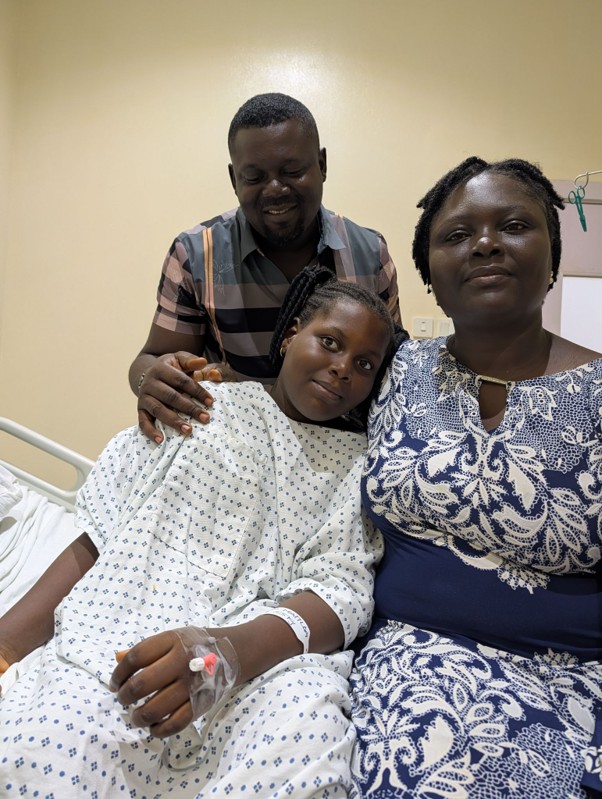
For Mrs. Kerem Alabo and her family in Port Harcourt, the first years of their daughter Matilda’s life were filled with fear, hospital visits, and uncertainty.
Matilda, now nine years old, was born prematurely and diagnosed with a heart condition soon after birth. Her parents did everything they could to manage it, but the condition affected her from infancy.
Unlike most babies, Matilda struggled to suckle and eat. As she grew older, everyday activities remained difficult. Then, at just one and a half years old, she experienced a major heart failure. She fell into a coma and had to be resuscitated.
“Those early years were the most difficult,” her mother recalls. “From when she was a baby until she was about two years old, it was very hard.”
Matilda was diagnosed with a ventricular septal defect (VSD) and patent ductus arteriosus (PDA)—conditions affecting the way blood flows through the heart. Her family was told that she would need open-heart surgery and that they would have to seek treatment outside Nigeria.
For the Alabo family, that recommendation seemed almost impossible.
They waited.
And waited.
For nearly nine years, the possibility of treatment remained out of reach. Their daughter was growing up, but in many ways, the family’s life was on hold.
“Waiting was not easy,” Mrs. Alabo says. “Our lives were paused.”
Then they found Dame Irene Okwuosa Memorial Hospital (DIOMH).
As May 2026 beneficiaries, the Alabo family arrived knowing that the procedure would not necessarily be easy. But after Matilda underwent further assessments, they received unexpected news: she did not need the open-heart surgery they had been preparing themselves for.
Instead, her heart conditions could be treated through interventional cardiology, a less invasive approach that could close the defects without conventional open-heart surgery.
For a family that had spent almost nine years waiting, the news brought a new sense of possibility.
“The process was easier than we expected,” Mrs. Alabo says.
Today, Matilda’s family can finally begin to imagine life beyond hospitals, referrals and years of uncertainty.
After nine years of waiting, their lives are moving again.
And for Matilda, childhood can finally be about being a child.